
Mary of Guelders was queen of James II of Scots, and their marriage took place in 1448 at Holyrood Abbey in Edinburgh. Mary was very well connected, being the great niece of the Duke of Burgundy, 'Philip the Good'. She brought wealth and European influence to the Scottish court. Much to James' delight she also brought a large dowry, including a significant haul of weapons and artillery including Mons Meg.


James was to come unstuck at the siege of Roxburgh in 1460, killed by one of his own guns which broke on firing. The young queen suddenly found herself taking personal charge of the siege which was brought to a successful conclusion. 

Following its capture she ordered the castle of Roxburgh to be slighted so it could never be used by the English again. The queen then presented the nine year old Prince James to her nobles, and his coronation as James III took place shortly after at Kelso Abbey.

Following the coronation, the queen dowager acted as regent for the young king, and continued to take an active part in the governing of Scotland. Mary died in 1463, three years after James, at only 30 years old, but she left a significant legacy in Edinburgh and beyond. She was responsible for the the foundation of Trinity College Kirk, part of which still stands in the city today. She is also directly linked with Holyrood Abbey, the fine Flemish 'Trinity Altarpiece' on display in the city's Scottish National Gallery, and Ravenscraig Castle in Fife. 

Wearing a royal tabard bearing the Queen's arms, her Messenger will tell you about Mary's life, and the duties he would have undertaken: carrying messages, reading proclamations and accompanying the queen as part of her personal bodyguard when she travelled. Celebrate the life of a less well known royal Mary! 


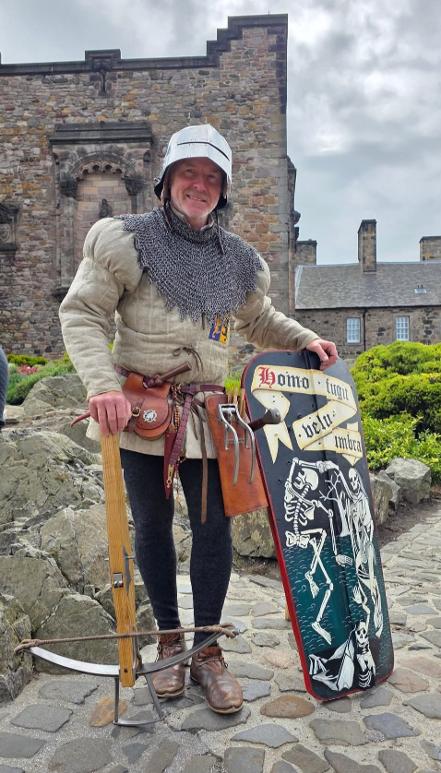
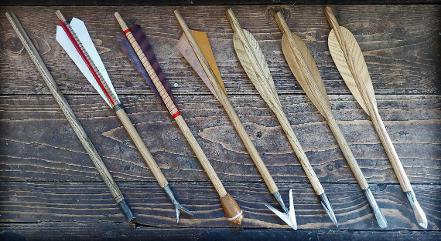
‘Picking a quarrel’ explains the munitions bow, used by trained archers on the battlefield. Unlike the highly decorative hunting or sporting bows used by wealthy princes, this weapon is plain, but very efficient and fit for purpose.

The crossbow allowed soldiers who had not received the years of training required to use a longbow the ability to defend themselves with a string weapon.

The crossbow was a flexible weapon, deployed in castle defence, on siege lines, aboard ships and in the open field. It was straightforward to use and very democratic due to the mechanical devices used to prepare it for shooting.

Primary source historical evidence exists for the use of crossbows at Edinburgh Castle in a purveyance document from 1299. Besides the weapons themselves, pack thread for making strings for the bows and goose wings for feathering quarrels are mentioned.

The weapon continued to be used at the castle by garrison troops throughout the medieval period, and it features in one of the castle’s own displays in David’s Tower. 

As well as the crossbow and its projectiles knowns as bolts or quarrels, other arms and equipment used by the archer are explained, including sword and buckler, and the typical crossbow archer’s shield, the pavise.

In the bombard Mons Meg, Edinburgh Castle has one of the most remarkable survivors from the middle ages. She was gifted to James II in 1457 by Philip the Good, the Duke of Burgundy. James married Philip's grand niece Mary of Guelders in 1449, and Mons, as she was then known by the Scots, was part of an extensive weapons dowry that came with James' new bride. 

Bombards like Meg were at the extreme end of gunpowder artillery development, and were principally used to reduce castles and fortified towns. Historical speculation surrounds her active service, and definitive 'battle honours' for Meg are impossible to pin down, however there are extant records of some of her outings. 

The Accounts of the Lord High Treasurer of Scotland 1473-98 contain extensive entries relating to the campaign of 1497, when the royal artillery train including Meg was dragged to the 'Raid of Norham': her job, to smash the walls of Norham Castle standing on the banks of the English side of the River Tweed.

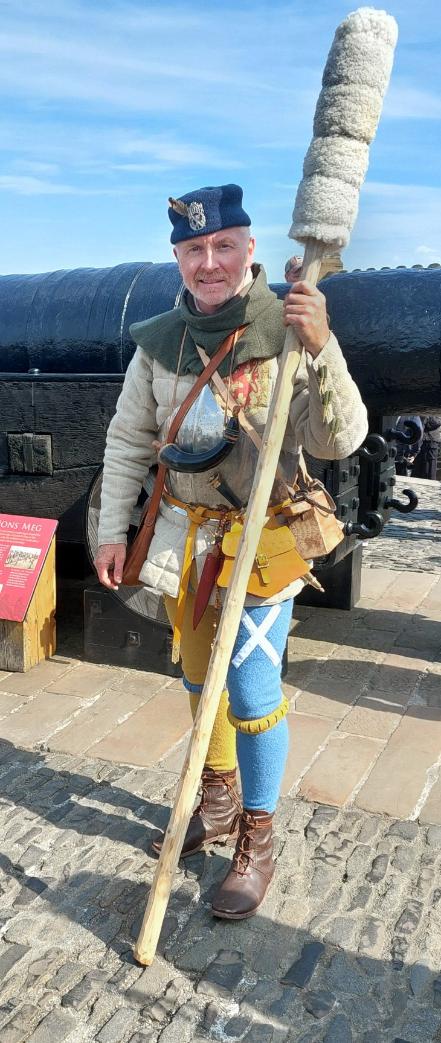
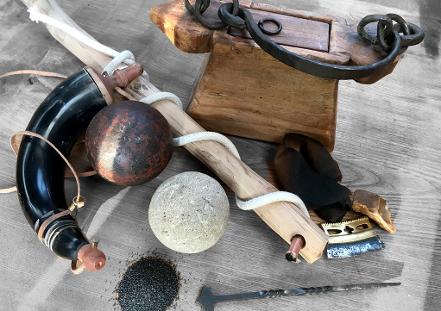
Equipped with the tools of his trade, including sponge, tinder box, powder horn and linstock, 'Hob the Gunner' gives Meg's vital statistics, explains how she was built, transported and prepared for firing, and tells the story of the Raid.  

The Great Hall at Edinburgh Castle was completed in 1511, in the reign of King James IV of Scots. James was a truly renaissance prince, full of ideas and passions for architecture, arts and the sciences. He was also however,  a very warlike prince, as befitted the medieval idea of kingship.

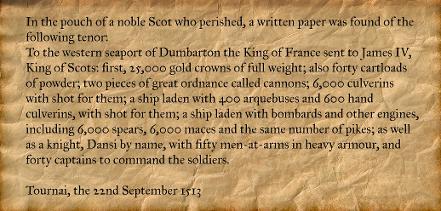
The Battle of Flodden, fought between England and Scotland in 1513 was a product of the long standing Auld Alliance, a military treaty between Scotland and France. As preparations for the Flodden campaign gathered pace James was very keen to adopt the continental pike which was dominating the European battlefields, combined with field artillery weapons.  

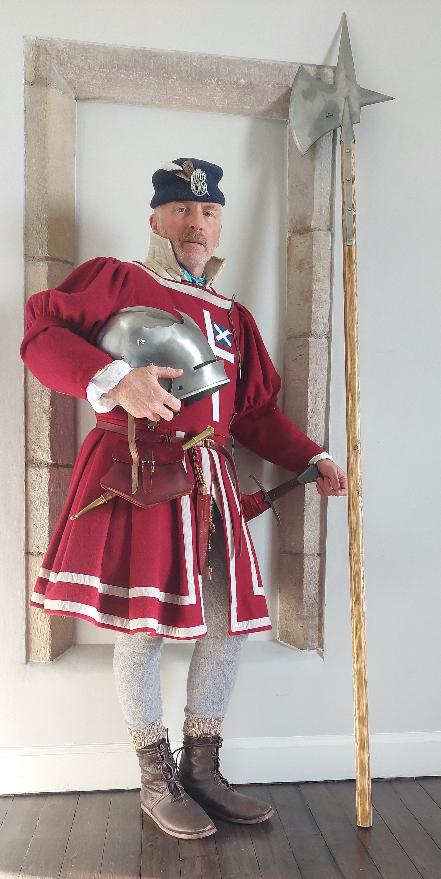
Traditionally the Scots had used the spear as their main infantry weapon, at around 10 feet in length, but the pike was much longer at 18 feet, and relied on disciplined advance in echelon formation. The sergeants carried halberds, a shorter multi use weapon, very like the billhook used by English troops. Halberds and billhooks were formidable weapons, combining a spear head and a rear spike called a 'fluke' which were capable of punching holes in armour, and an axe head which could be laid on with great force, slashing anything in its way.
In the end, the Battle of Flodden was a disaster for the Scots; the pikes were confounded by the ground which stopped the advance and rendered them useless. Many of the French sergeants who came to fight with the Scots were murdered after the battle by their own side who blamed them for the defeat. The reality was that the French soldiers weren't given enough time to properly drill the Scots, and the chosen ground was completely unsuited to effective tactical use of the pike. The weapon remained however, as 'pike and shot' started to become the accepted way of warfare in the 16th century.

The sergeant is dressed in the continental style waffenrock which bears the crosses of Scotland and France. He is armed with a halberd, sword and dagger, and wears a visored sallet

As a royal weapons store Edinburgh castle played a key role in the preparations for the Flodden campaign, and many of the Scots troops mustered within sight of the castle on the open ground of the Burghmuir, the area now known as The Meadows.